The Bigger Gear Bag Is Not the Better Start
Fitness gear bag essentials are easier to choose when you match each item to a planned activity, avoid carrying unused kit and keep packing simple.
What fitness gear bag essentials do you actually need for a new activity? Start with the session you plan to do, not a collection of items associated with exercise. A useful bag carries equipment that serves that outing, along with any personal essentials you need to bring.
A planned activity gives the bag its purpose
Imagine Sam has decided to take a brisk walk through a nearby park. Before the first outing, Sam buys a resistance band, a skipping rope, a foam roller, lifting gloves and small hand weights. Each item is associated with exercise, but none answers the first practical question: what will Sam do on this walk?
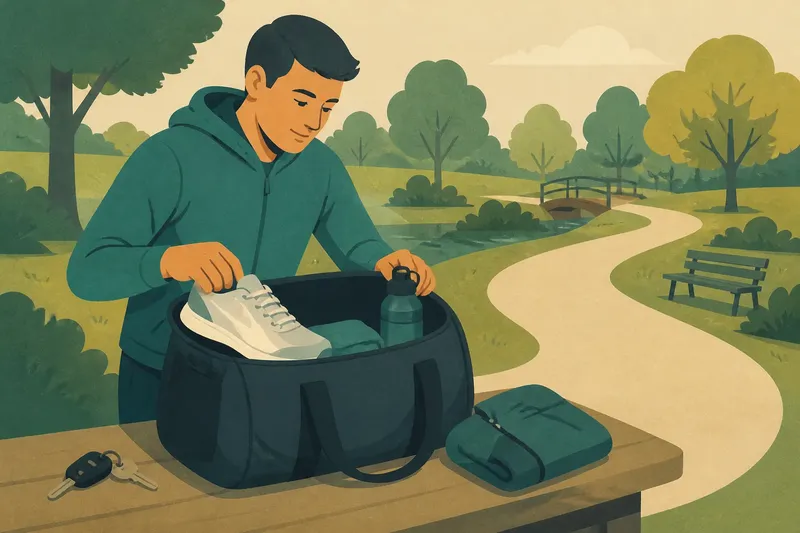
For this outing, Sam needs shoes that feel secure, clothing suited to the weather and a way to carry personal essentials. The route is familiar, and the plan is to walk rather than add strength work or stretching drills. The new items would stay unused in the bag, taking up space without helping Sam follow the plan.
This does not mean extra equipment is pointless. It means equipment should support a specific activity rather than stand for other activities that might happen. A skipping rope may suit a session built around skipping; a band may be useful for a routine that includes band exercises. Their usefulness depends on the session, not simply on being fitness items.
Sam sorts the gear by what the walk asks for
Before leaving, Sam lays out the planned walk and checks each item against it. The shoes suit the park’s paved paths and compacted gravel. A light layer may help if the weather changes. A water bottle and keys serve practical needs, while a small bag makes them easier to carry. The weights and gloves have no part in the outing, so Sam leaves them at home.
That choice makes the bag easier to manage and the plan easier to remember. Sam can set off without deciding how to fit several unrelated tools into a walking bag. The observable result is straightforward: fewer packing decisions, and a clear purpose for each item carried.
If Sam later plans a short strength routine at home, the questions change: which movements are included, what surface is available, and whether any equipment is needed? A band may suit some routines, while body-weight movements may need no additional tool. Buying an item before answering those questions reverses the decision.
Choose equipment for the job, not the category
Fitness equipment is often grouped under labels such as “strength”, “recovery” or “cardio”. Those labels can help with browsing, but they do not show whether an item belongs in your routine. An item earns a place when you can name the activity it supports and explain how you intend to use it.
Before adding something to a bag or buying it, check the following:
- Planned activity: If you can name the session or movement, pack for that plan; if you cannot, decide what activity you intend to do before choosing equipment.
- Required kit: If the activity calls for a particular item, bring it; if not, leave unrelated tools at home and begin with the essentials.
- Setting: If the route, floor space or storage suits the item, consider using it there; if the space is unsuitable, choose a different setting or leave the item behind.
- Need to begin: If the activity can start without the item, try it without buying more; if a specific need becomes clear, consider an item that addresses it.
- Fit for use: If the item is intended for the task and its instructions suit your use, follow them; if not, choose a more suitable option or ask a qualified professional where safety matters.
- Venue provision: If a class or facility supplies the equipment, check whether you need to bring anything yourself; if it does not, pack the stated kit or ask the venue what is required.
These checks need not produce a perfect plan. For walking, comfort and practical carry needs may matter more than a collection of training tools. A class may provide its own equipment, making personal kit unnecessary. At home, limited floor space may rule out a bulky item even if it looks appealing.
A small bag makes the routine easier to read
When each item has a named job, it becomes easier to notice what is missing and what is surplus. Sam’s walk does not need a foam roller just because stretching could happen another day, nor hand weights simply because they might suit a different session. The bag can reflect the activity rather than a vague idea of being prepared.
Owning an item is different from needing it on every outing. Sam might keep a band at home for a separate strength routine without putting it in the walking bag. Equipment can be available without travelling everywhere with you. That distinction prevents one bag from becoming a store of every possible intention.
It is not worth building an elaborate system of pouches, labels or compartments before you know what you routinely carry. If an item is used often, a simple place for it may help. If it rarely leaves the cupboard, reorganising the bag around it will not make the activity clearer.
What should you pack for a new activity?
Should I buy equipment before my first session?
Check what the activity requires and whether a venue or instructor supplies shared kit. If no special item is needed to begin, use suitable everyday essentials and decide later whether a specific gap remains.
How do I know whether an item belongs in my gear bag?
Name the session in which you will use it and the task it serves. If you cannot connect it to the planned activity, store it elsewhere until a routine gives it a clear role.
Can one bag serve different kinds of exercise?
Yes, if you pack for the outing rather than carrying every item for every possibility. Keep less frequently used equipment at home, then choose what to bring when you know which activity you are doing.
What if my needs change after I start?
Let the routine guide the next decision. A route may call for a different layer, or a planned exercise may need a particular tool; add equipment in response to that specific need instead of anticipating every future activity.
Sam lets the routine guide the next addition
Say Sam completes the walk and later chooses to add a brief strength session at home. Sam writes down the planned movements, checks the available space and sees that a band is relevant to one exercise. The band now has a defined use and a place in the home routine, while the walking bag stays light. The result is a clear link between the equipment and the activity, not a promise of faster progress.
More objects do not automatically make a routine more complete. For anyone choosing fitness gear bag essentials, the sound starting point is a real activity, its setting and the items that support it. Give each new piece of equipment a specific job, and keep the bag flexible enough to reflect the outing you are actually taking.