A Rainy Afternoon, One Clear Patch of Floor
A rainy-day indoor movement break can fit one clear patch of floor: choose a comfortable spot, adapt to its limits and keep the plan flexible.

Where can you move when rain keeps you indoors and the room seems too crowded? A rainy-day indoor movement break does not need an empty room or a full workout plan. It needs a patch of floor where you can shift comfortably, a few movements suited to that space and permission to stop or change course.
The usual snag is treating the room as something to fix before moving. Furniture may be heavy, the floor may feel awkward, or other people may be using the space. Instead of trying to reclaim the whole room, look for one usable area and decide what kind of movement it can support today.
Start with the patch you can actually use
Scan the room for a place where you can stand or sit without being in a doorway, beside a hot appliance or directly in someone’s path. A clear area beside a sofa, at the end of a bed or near a kitchen table may be enough. The aim is not to create a studio; it is to find a spot where your chosen movements feel unhurried.
Check what is underfoot. A rug that bunches, a slippery surface or a hard edge near your feet can make a simple movement feel distracting. If the floor is uncomfortable, choose movements done seated or standing in place rather than stretching or kneeling on it. A stable chair can be useful for seated movement or as a light touchpoint for balance, but do not use furniture in a way that makes it wobble.
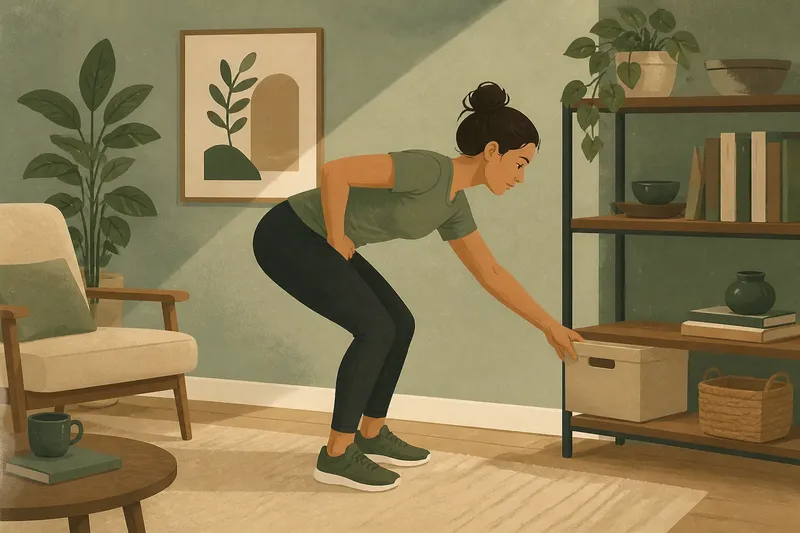
Then test the space with an ordinary reach in each direction you plan to use. If your hand would hit a lamp, shelf or wall, narrow the movement or choose another one. You do not have to move furniture to prove the room can work. A smaller range of motion is a sensible adaptation, not a failed version of a bigger exercise.
When clutter keeps taking over
A crowded room can make the decision feel bigger than the activity. It is tempting to start tidying everything, then run out of time or energy before moving at all. Usually, the practical cause is that the intended movement takes more room than the available patch.
Try changing the movement before rearranging the room. Walking on the spot, shoulder circles, gentle side-to-side weight shifts or seated ankle movements need little floor space. Keep your arms closer to your body if a wide reach would meet furniture. If you do move an object, shift only something light and easy to handle, and leave heavy or unstable items alone.
Say you have a narrow strip between a coffee table and a sofa. You could leave the table where it is, stand facing the sofa, and choose slow heel raises and small shoulder rolls with your hands near your sides. The expected observable result is that you can move without repeatedly checking for nearby objects; if that still feels cramped, seated ankle circles may suit the strip better.
When the floor feels uncomfortable
Hard flooring can make kneeling or lying down unpleasant, while a thick rug may catch your feet. The source of the problem is often a mismatch between the surface and the position, rather than a need for special equipment. Choose standing or seated options if getting down to the floor feels awkward.
If you already have a firm, non-slip mat, it may make a standing spot more comfortable, but it is not required. Avoid stacking cushions or folded blankets where they could shift underfoot. For floor-based movement, use a surface that stays put and choose positions you can enter and leave comfortably. If the room offers no suitable surface, keep the break upright.
Not every discomfort needs solving with a purchase or a complicated setup. It is not worth spending the afternoon hunting for the perfect mat or clearing an entire room just to make a short break possible. A comfortable standing option is enough for many indoor movement choices.
When other people share the room
In a shared home, the clearest floor may also be someone else’s route or work area. The problem is not a lack of discipline; it is a space that has more than one job. Choose a time or corner that does not interrupt another person, and keep movements contained rather than swinging arms or stepping backwards.
You can also use a seated option if someone is working nearby, or take a brief standing break beside a chair when the room is quiet. If you need to pause because someone walks through, pause. There is no need to restart a sequence or make up for the interruption.
When you cannot decide what to do
A flexible break is easier to begin when it has a simple shape, but it need not follow a rigid routine. Choose a comfortable starting position, a few movements that fit the patch and a natural stopping point, such as when the kettle is ready or a song ends. Keep the effort easy enough that you can talk comfortably, and change any movement that feels uncomfortable.
- Standing: Try gentle marching in place, small heel raises or relaxed shoulder rolls.
- Seated: Move your ankles, extend one leg at a time within a comfortable range or roll your shoulders.
- Using a chair: Sit and stand only if the chair is stable and the movement feels comfortable; otherwise remain seated.
- Feeling restless: Add small side steps only if there is clear space beside you.
- Low on energy: Choose one movement and do it gently, or simply change position and take a few easy breaths.
None of these options needs to be completed as a set. You can switch from standing to sitting, shorten the break or stop. A movement break is useful as a change of position and attention; it does not have to resemble a formal exercise session.
What should you do if the room is very small?
Can I move without stepping around?
Yes. Seated ankle movements, shoulder rolls and gentle weight shifts can be done with little or no travel. Keep the range comfortable and leave anything out that brings you close to a wall or furniture.
Do I need to move furniture first?
Usually not. See whether a smaller movement fits the space you already have, and shift only a light object if doing so is straightforward. Leave heavy or unstable furniture where it is.
What if the floor is hard or slippery?
Choose a stable standing area and movements that do not require kneeling or lying down. If your footing feels uncertain, sit in a stable chair instead of trying to adapt the surface during the break.
How long should the break last?
There is no required duration for this kind of pause. Stop when you feel ready to return to what you were doing, or continue with another comfortable movement if you still want to move.
Let the plan change with the room
Indoor space changes through the day: a chair gets moved, a child’s toys appear, or the quiet corner becomes busy. Treat the plan as adjustable. If the patch becomes unsuitable, switch to seated movement, wait for a clearer moment or skip the break without turning it into a problem to solve.
For a rainy-day indoor movement break, the useful question is not whether the room is ideal but whether one spot can support a comfortable choice right now. Find the clear patch, choose a movement that respects its limits and leave yourself free to change it. That small decision can make being indoors feel less like a barrier and more like a workable setting.